
Gratiot County Arrest Warrants Explained
A Gratiot County arrest warrant is a judge's command. It tells a peace officer to take a named person into custody and bring them before the court. The document identifies the accused. It also describes the offense. Michigan rules give the judge another option on the same complaint: a summons. A summons sets a date and simply asks the person to appear, while a warrant orders the arrest. The judge makes that choice, and the rules list reasons to prefer a warrant, including a concern that the person will not show up.
Probable Cause Starts a Gratiot Warrant Case
Probable cause is the test a judge applies before signing an arrest warrant in Gratiot County. It asks whether the facts are enough. The complaint's facts must show an offense happened and that this person did it. A police report alone does not pass that test. Someone with legal authority must review it and agree. In Gratiot County, that authority rests with a District Court judge at 65B and with appointed magistrates who may authorize criminal warrants. The official court page lists arrest and search warrant issuance among its work. A Circuit-level judge handles a felony once it passes the preliminary stage.
Inside a Gratiot County Arrest Warrant
A Gratiot County arrest warrant is short and specific. It names the accused, the offense, and the arrest order. The supporting complaint carries the facts, while bond and any conditions come from the judge at or after arraignment.
| Case Number | The court identifier, for example 2024-001234-FH. |
|---|---|
| Accused Name | The name or description on the complaint. |
| Offense | The charge the complaint describes. |
| Issuing Court | 65B District Court, or the 29th Circuit Court in a later-stage matter. |
| Command | The direction to a peace officer to bring the person before a judicial officer. |
| Status | Issued, served, recalled, or cancelled. |
The Gratiot Prosecutor's Warrant Complaint Review
Complaints do not jump straight to a judge. The Gratiot County Prosecuting Attorney reviews complaints from police agencies and from residents. The office also represents the state in criminal matters. Many complaints get shaped, narrowed, or declined at this stage of the warrant process. You can reach the office at 214 E Center Street in Ithaca, or call 989-875-5236 during business hours. It is not a records desk. The office cannot confirm a warrant status over the phone for a member of the public. Ask the court that holds the case.
Serving Arrest Warrants in Gratiot County
Once entered, a warrant goes to a peace officer. The Gratiot County Sheriff's Office handles county process and road patrol across more than 500 square miles. Alma Police and St. Louis Police operate here too. Each agency can execute process as authorized. Whenever a warrant is entered, modified, recalled, or cancelled, the clerk notifies the originating law-enforcement agency. That is why a deputy may know of an order no public website ever showed. Service can happen at a Gratiot County traffic stop. It can happen at a home or when someone walks into a police station. Nothing in the process promises a warning first.
From Gratiot Warrant Complaint to Arraignment
Once a Gratiot County warrant is signed, the timeline moves fast. Police investigate and send the prosecutor a report. The prosecutor prepares a complaint. A judge or magistrate then reviews it for probable cause, chooses between a warrant and a summons, and after an arrest the person appears for arraignment without unnecessary delay.
Case flow: police report › prosecutor review › complaint filed › probable cause finding › warrant issued › arrest › arraignment at 65B › District case or bind-over to the 29th Circuit.
A felony begins in Gratiot County District Court. The arraignment and preliminary examination happen there. If the case is bound over, the 29th Circuit Court takes the trial-level work and the County Clerk files the record.
Comparing Arrest, Summons, and Bench Warrants
Three documents can pull someone into court. Each does a different job in a Gratiot County case, and knowing which one applies tells you what to expect next.
| Document | What It Does | How It Starts |
|---|---|---|
| Arrest warrant | Commands an arrest and a court appearance | A complaint and a probable-cause finding |
| Summons | Orders an appearance without an arrest command | The same complaint process |
| Bench warrant | Commands an arrest after a missed obligation | A missed hearing or ignored court order |
Note: A summons is not a lesser charge, and a bench warrant is not a new offense, but each carries its own consequences.
Gratiot Warrants and Federal Warrants Differ
A federal warrant belongs to a different system entirely. Federal charges are filed in federal court. The Eastern District of Michigan covers this area. Public federal dockets appear through PACER federal court public access, and the U.S. Marshals Service handles federal fugitive work. A Michigan records search misses a federal warrant. A federal docket search will not turn up a Gratiot County case either. If you are unsure which system issued an order, the safest first call is to a lawyer.
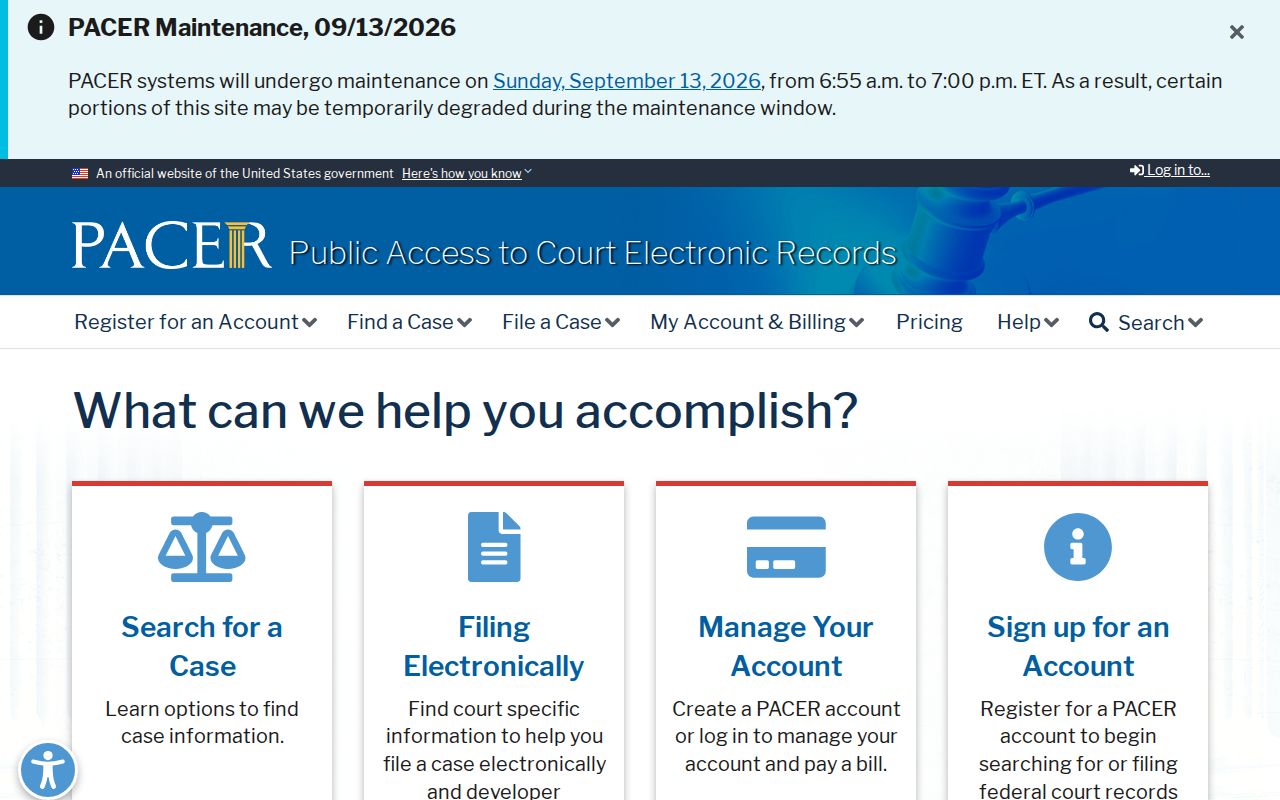
PACER covers federal filings only, not Gratiot County warrant records, so it sits beside the county search rather than replacing it.
If There's an Arrest Warrant for You
Talk to a Gratiot County lawyer before anything else. An attorney can learn what the warrant covers, explain the possible outcomes, and arrange a voluntary appearance if that fits the case. Michigan court rules allow a voluntary appearance in some warrant matters. Exceptions apply, though.
Important: Do not run from an open warrant. A traffic stop or any police contact can lead to arrest and a night in jail.
If a Gratiot County judge sets bond, ask which payment channel the court accepts. Confirm the payment is credited to the right case. The county court pages link online payment for fines, costs, and bail. Bond must be posted in the defendant's name.
Why Gratiot Warrant Records May Be Incomplete
Gratiot County court files are public, but plenty never reach a screen. Search warrant affidavits stay sealed for a while. Juvenile matters are closed off. Sealed cases, investigative material, and warrants sitting in courts that skip online posting stay hidden from any name check. So an empty search result proves almost nothing. A case that shows up tells you something; a blank one does not. Before you conclude anything, call the court that would hold the file and ask it directly.